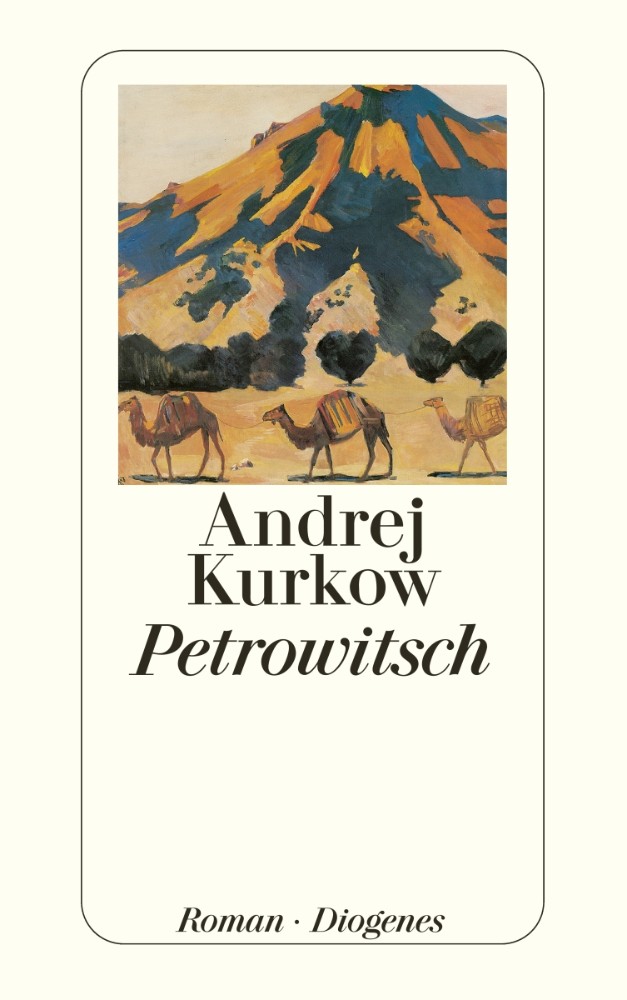
When the unemployed history teacher Kolya moves into a new apartment in the Old Town of Kyiv, he finds a book by the Ukrainian poet Taras Shevchenko with a great many hand-written commentaries. On closer perusal of the book, Kolya finds references to a diary by the poet which was believed to be lost without trace, and which now seems to be in a fort in the middle of the desert in Mangyshlak in Kazakhstan. Kolya sets off for Kazakhstan. Since he has no money for the journey, he stows away on a floating fish factory. A few days later he is set ashore with five litres of water and a substantial store of tinned fish, and a long march ensues. But the sun burns down relentlessly, Kolya's knowledge of the region is scanty, and he soon curses himself for having had such a crazy idea. He nearly perishes in a sandstorm, but a camel belonging to an old Kazakh pulls him out of the sand. The nomad Dshamshed takes the exhausted Kolya into his yurt, and his daughters Natasha and Gulya nurse him back to health ... An exciting adventure novel, an enchanting love story and a protest against all nationalism, whether Russian, Kazakh or Ukrainian.