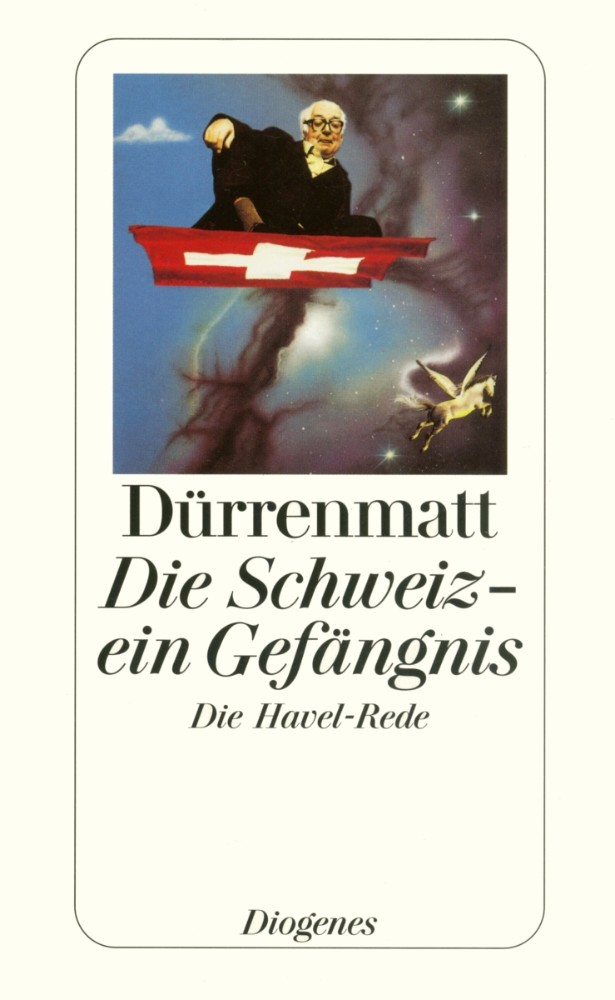
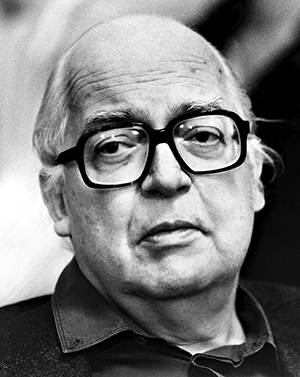
On 22 November 1990, on the eve of Switzerland’s 700th anniversary and shortly before his own death, Friedrich Dürrenmatt gave an official speech in tribute to his friend and colleague Václav Havel – President of the Czech and Slovak Federative Republic, writer and former dissident. In his address, Dürrenmatt – a socio-political »enlightener« not just in others’ eyes, but his own, too – contrasted Switzerland’s romanticized self-image with the reality of its identity crisis and concrete political shortcomings. Using the country as an example, he describes a situation that he expressed in conversation with Michael Haller as the following: »Nowadays, people are struggling to trust their thought processes. After all, the knowledge we possess about the state of the world is hard to bear. That's why they prefer to believe: some in this, others in that.« This is a theme which pervades Dürrenmatt’s writing like a basso continuo, from his earliest prose to the essays of his later work: the human being who no longer understands the labyrinthine relationships of life, power and state, and flees into idealization instead of seeking and demanding enlightenment.
The volume also includes a speech by the Swiss Minister of Defense, Federal Councillor Adolf Ogi, on Friedrich Dürrenmatt, the free individual: »He had the courage to take his own standpoint. A courage that can be dangerous, even in a democracy.«