.svg)
Filter

Im Warenkorb
Vincent van Gogh
Biographical Essay
Published by Diogenes as Vincent van Gogh – Der Blick in die Sonne
Original Title: Vincent van Gogh - Der Blick in die Sonne
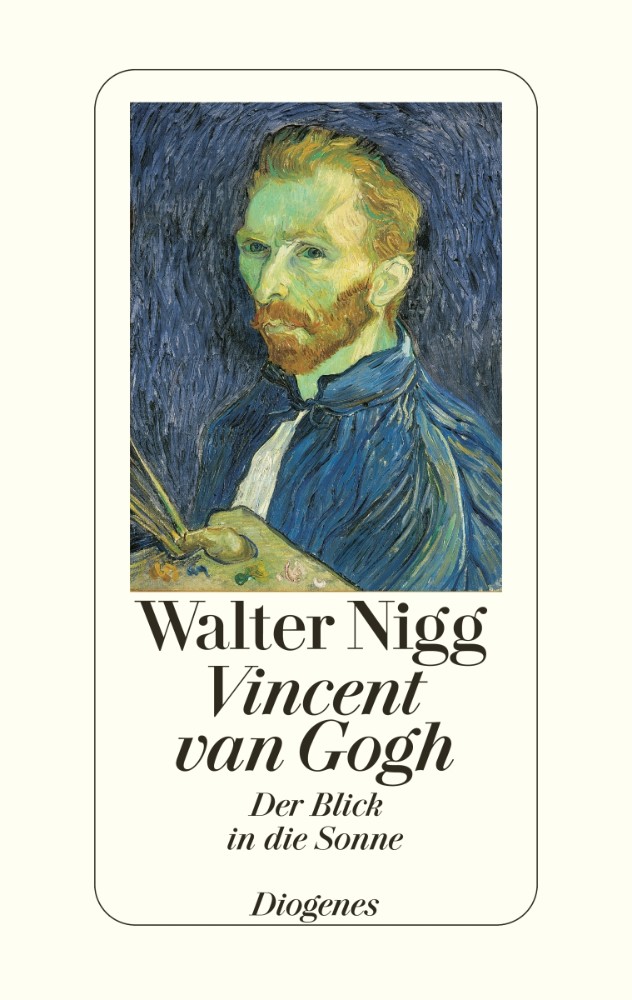
The theologian Walter Nigg spent his whole life studying the great religious thinkers – and his sympathy seems to have been with the unsaintly rather than the saintly, and with the heretics rather than the conformists. In Vincent van Gogh, the unorthodox theologian comes to grips with one of the most unorthodox figures of the 19th century, a brilliant painter who was also a heretic, seeker after God and prophet who spent his whole life striving for and bitterly opposing God. Like Tolstoy, van Gogh finally broke with the church and the clergy and lived according to the laws of a self-created, nature-based religion. Walter Nigg's attempt to retrace Vincent van Gogh's life would appear ambitious – there has scarcely been so much written about any other painter, and few paintings are less well-known than his sunflowers. In fact, however, this abundance of literature makes Nigg's book all the more well worth reading, for the originality and insistence with which he describes van Gogh's life from a quite different angle, namely the religious perspective, and the extent to which religious and artistic development merge and blend, are rare in the extreme.
Biographies,
Art, Cartoon, Photography
11.6 × 18.4 cm
192 pages
2003
978-3-257-06348-6
World rights are handled by Diogenes
11.6 × 18.4 cm
192 pages
2003
978-3-257-06348-6
World rights are handled by Diogenes
»It does me good to work so hard. But it does not quell my terrible need for, dare I say the word, religion. I go out at night to paint the stars… I only wish we could find something that would give us peace and comfort us so that we could stop feeling guilty and unhappy. Then we could progress without getting lost in loneliness or in nothings…«
Vincent van Gogh
»Walter Nigg never succumbs to generalities and abstractions, but writes on a biographical and representational level. He neither plays with concepts nor juggles with phrases (either unctuous or protesting), but thinks in terms of the characters whom he describes so brilliantly by entering into their essential beings.«
Gerd-Klaus Kaltenbrunner